Cass Green
Mr. Nickel
EMS 3O
January 9th, 2016
Pac-Culture
Mario. Sonic The Hedgehog. Pikachu. Even characters from decades past have been able to maintain a powerful legacy in the hearts of many, for their impacts on society and the gaming industry are everlasting. However, none of these beloved characters would exist if not for that fateful moment in 1980, when Pac-Man entered the fray and reigned supreme in the war of arcade gaming. Pac-Man relates to Marshall McLuhan's theories of violence equaling a lack of identity, new technology transforming old culture into a work of art, and culture dictating educational methods in connection to today's youth, and because of that Pac-Man has become a pop-culture moment that will live on for eternity.
Violence has always been one of the biggest aspects of entertainment, being incorporated into every type of media imaginable. McLuhan once said that "Identity is always accompanied by violence”, and this is especially true of the Pac-Man series. It is not an overly violent game, however Pac-Man and the ghosts' constant desire to devour each other is somewhat unnerving. The song "Pac-Man Fever" by Buckner & Garcia focuses on a person's obsession with the game's violence; an obsession so extreme that the person willingly gives up everything in order to continue playing. The lines "I don't have a lot of money But I'm bringing everything I
made" demonstrates the person's utmost dedication to the game, and how they are
willing to waste all of their money playing an arcade game instead of procuring the bare necessities for survival. "I'm goin' outta my mind" is
the most repetitive phrase in the song, and it reveals that the person is slowly losing their sense of
self to the violence within the game. Pac-Man caused many people to lose sight of themselves due to its violence, a feature that is prevalent in video games today.
New technology is always built upon prior knowledge and old customs, and because of this, McLuhan believed that new technology could transform aged traditions into a masterpiece. Pac-Man was able to seamlessly fuse the cultures of both the past and the present in the form of a Pac-Man board game. Board games are known to be the old-fashioned way of gaming, as they were extremely popular before arcade machines came onto the scene. Combining the traditional element of moving a random amount of spaces after rolling the dice with the wacky, high-speed maze chase associated with Pac-Man creates a flawless representation of gameplay's history up to that point in time. Pac-Man
proves to be capable of taking the old-fashioned ways of gaming and incorporating the modern
attributes of its own game into it, thus creating something entirely
new.
Education is highly valued in the eyes of every society, causing McLuhan to theorize that different cultures dictate different educational methods, especially when it comes to children. Most commonly in Western culture, cartoons are used to show social commentary and teach morals to kids using characters and worlds of fantasy. The Pac-Man television adaptation (otherwise known as Pac-Man: The Animated Series) is a great example of a cartoon that teaches children important life lessons. The episode Picnic In Pacland teaches the audience that good will
always triumph over evil, for the Ghost Monsters continuously try to eat
Pac-Man during his family picnic, but to the fortune of Pac-Man, each of the Ghost Monsters' plans to do so ends up as a disaster. Pac-Man has the ability to educate the young about important morals and to prepare them for if they become the victim of evil intentions.
Pac-Man is a pop-culture moment that will live on forever, for it follows McLuhan's theories of violence resulting in a lack of identity, new
technology reworking old culture into a work of art, and culture
determining educational methods in connection to the young. It helped sow the seeds of violence in video games and caused people to lose control of themselves because of their lust for power, as demonstrated by the protagonist of the song "Pac-Man Fever". The conventional elements of board games and arcade games were blended together to create a Pac-Man board game that represents gaming history up to the early 1980s. Pac-Man teaches children via cartoon that good intentions will triumph over evil and prepares them in advance for the possibility of ending up in dangerous situations. Like many other heroes in gaming, Pac-Man's legacy and impact on the world will forever remain unforgotten.

Friday, January 8, 2016

Thursday, January 7, 2016
Part B: Five Artifacts
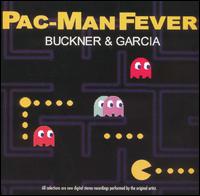
1. "Pac-Man Fever" by Buckner & Garcia
https://www.youtube.com/watch?v=brVsGL4cPzE
"Pac-Man Fever" by Buckner & Garcia is an example of how violence equals a lack of identity. The song talks about a person who wastes all their money and loses themselves because of their obsession with Pac-Man, a game that can be considered violent due to the ghosts and Pac-Man constantly trying to devour each other. The lines "I don't have a lot of money But I'm bringing everything I made" emphasize the person's dedication to the game, and how they are willing to do without buying other luxuries and necessities just so they can continue to play. "I'm goin' outta my mind" is a line that is repeated often throughout the song, and it shows that the person is slowly losing their sense of self to the violence within the game.
2. Pac-Man Cereal

http://www.mrbreakfast.com/cereal_detail.asp?id=272
The Pac-Man cereal is a good example of a cool medium. It involves a large amount of interaction from its audience as it is meant to be eaten by them. The product engages the senses of taste and smell simultaneously, making a contrast to the way that hot mediums only engage one sense completely.
3. "Pac-Man" TV series
_title_card.jpg)
http://www.imdb.com/title/tt0083461/
The "Pac-Man" TV show is an example of culture dictating educational methods and how that education tries to relate to the young. The medium relates to children in the form of a cartoon, a format that is used to portray real world issues and morals to kids using characters and worlds of fantasy. In the television adaptation of Pac-Man, the episode Picnic In Pacland teaches children that good will always triumph over evil, for the Ghost Monsters continuously try to eat Pac-Man during a family picnic and each of their plans to do so goes horribly awry.
4. Pac-Man Board Game

http://pacmanmuseum.com/collection/
The Pac-Man board game is an example of how new technology tidies old culture into a piece of art. With arcade machines being a much more recent format for gaming than board games, it just goes to show that Pac-Man can take the old-fashioned way of gaming and incorporate the modern attributes of its own game into it, thus creating something entirely new.
5. Pac-Man and The Ghostly Adventures 4 Inch Figure
 http://www.amazon.com/Pac-man-Ghostly-Adventures-Grabbin-Yellow/dp/6040764309/ref=sr_1_33?s=toys-and-games&ie=UTF8&qid=1451795799&sr=1-33&refinements=p_lbr_characters_browse-bin%3APac+Man
This 4 inch Pac-Man figure demonstrates how a source tends to be lost because it doesn't connect to others, its medium does. Children don't care about who made the toy, they only care about the toy itself. The toy connects to the children because they are physically playing with the video game character they look up to and love.
https://www.youtube.com/watch?v=brVsGL4cPzE
"Pac-Man Fever" by Buckner & Garcia is an example of how violence equals a lack of identity. The song talks about a person who wastes all their money and loses themselves because of their obsession with Pac-Man, a game that can be considered violent due to the ghosts and Pac-Man constantly trying to devour each other. The lines "I don't have a lot of money But I'm bringing everything I made" emphasize the person's dedication to the game, and how they are willing to do without buying other luxuries and necessities just so they can continue to play. "I'm goin' outta my mind" is a line that is repeated often throughout the song, and it shows that the person is slowly losing their sense of self to the violence within the game.
2. Pac-Man Cereal
The Pac-Man cereal is a good example of a cool medium. It involves a large amount of interaction from its audience as it is meant to be eaten by them. The product engages the senses of taste and smell simultaneously, making a contrast to the way that hot mediums only engage one sense completely.
3. "Pac-Man" TV series
http://www.imdb.com/title/tt0083461/
The "Pac-Man" TV show is an example of culture dictating educational methods and how that education tries to relate to the young. The medium relates to children in the form of a cartoon, a format that is used to portray real world issues and morals to kids using characters and worlds of fantasy. In the television adaptation of Pac-Man, the episode Picnic In Pacland teaches children that good will always triumph over evil, for the Ghost Monsters continuously try to eat Pac-Man during a family picnic and each of their plans to do so goes horribly awry.
4. Pac-Man Board Game

http://pacmanmuseum.com/collection/
The Pac-Man board game is an example of how new technology tidies old culture into a piece of art. With arcade machines being a much more recent format for gaming than board games, it just goes to show that Pac-Man can take the old-fashioned way of gaming and incorporate the modern attributes of its own game into it, thus creating something entirely new.
5. Pac-Man and The Ghostly Adventures 4 Inch Figure

This 4 inch Pac-Man figure demonstrates how a source tends to be lost because it doesn't connect to others, its medium does. Children don't care about who made the toy, they only care about the toy itself. The toy connects to the children because they are physically playing with the video game character they look up to and love.
Wednesday, January 6, 2016
Part A: Media Tetrad
Extends - (improves the lives of others)
-Provided a form of entertainment in which its simplicity made it immediately catch on with the public
-Was the first game to feature the idea of a "power-up", a feature that is prevalent in almost every video game nowadays. This improves the lives of others because it makes the games easier to complete and less infuriating for the gamers.
-Laid the foundations for the stealth game genre, as the avoidance of enemies was emphasized more than facing them head on. This had an influence on the stealth game Metal Gear, in which the guards chasing Solid Snake and the ghosts chasing Pac-Man make for an interesting comparison.
Obsolesces - (what it makes obsolete/what is lesser now because of this?)
- Asteroids was formerly the best-selling arcade game in North America, but was overshadowed by Pac-Man
-Space Invaders was originally one of the most popular arcade games in Japan at the time, but Pac-Man's overwhelming success in North America made the Japanese take a second look at the game, and eventually became the most popular game in the gaming industry up to that point.
- Galaxian was another popular arcade game at around the time of Pac-Man's release, but due to the coin-op and PC versions having better graphics, the arcade version was quickly overshadowed by Pac-Man's success.
Retrieves - (brings back memories of something similar)
-Similar to playing "hide-and-seek" as Pac-Man would be hiding from and seeking the ghosts
- Other arcade games such as Space Invaders, Asteroids, etc.
-Chuck E. Cheese's, a restaurant that contains an arcade.
Reverses - (people are sick of it; create something new about it)
-"Pac-Man Fever", a song by Buckner and Garcia
-"Pac-Man" TV series
-Pac-Man cereal created by General Mills
-Provided a form of entertainment in which its simplicity made it immediately catch on with the public
-Was the first game to feature the idea of a "power-up", a feature that is prevalent in almost every video game nowadays. This improves the lives of others because it makes the games easier to complete and less infuriating for the gamers.
-Laid the foundations for the stealth game genre, as the avoidance of enemies was emphasized more than facing them head on. This had an influence on the stealth game Metal Gear, in which the guards chasing Solid Snake and the ghosts chasing Pac-Man make for an interesting comparison.
Obsolesces - (what it makes obsolete/what is lesser now because of this?)
- Asteroids was formerly the best-selling arcade game in North America, but was overshadowed by Pac-Man
-Space Invaders was originally one of the most popular arcade games in Japan at the time, but Pac-Man's overwhelming success in North America made the Japanese take a second look at the game, and eventually became the most popular game in the gaming industry up to that point.
- Galaxian was another popular arcade game at around the time of Pac-Man's release, but due to the coin-op and PC versions having better graphics, the arcade version was quickly overshadowed by Pac-Man's success.
Retrieves - (brings back memories of something similar)
-Similar to playing "hide-and-seek" as Pac-Man would be hiding from and seeking the ghosts
- Other arcade games such as Space Invaders, Asteroids, etc.
-Chuck E. Cheese's, a restaurant that contains an arcade.
Reverses - (people are sick of it; create something new about it)
-"Pac-Man Fever", a song by Buckner and Garcia
-"Pac-Man" TV series
-Pac-Man cereal created by General Mills
Subscribe to:
Posts (Atom)